


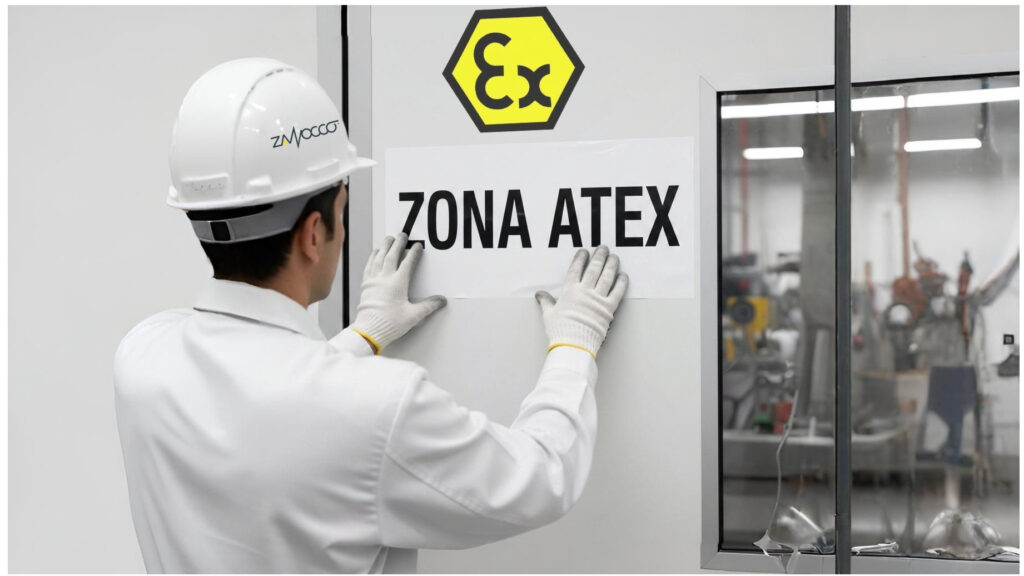

Workplace safety in environments with potentially explosive atmospheres is a critical issue. Proper ATEX zone classification is the first essential step to protect workers, equipment, and production continuity.
ATEX zones are areas where an explosive atmosphere may form, meaning a mixture of air and flammable substances (gases, vapours, mists, or dusts) which, in the presence of an ignition source, can cause an explosion. The level of risk depends on the likelihood of formation and the duration of the explosive atmosphere.
The regulatory framework is defined by:
Directive 2014/34/EU (ATEX 114): requirements for equipment and protective systems intended for use in potentially explosive atmospheres.
Directive 99/92/EC (ATEX 137), implemented in Italy by Legislative Decree 81/08 – Title XI: protection of workers’ health and safety.
The employer is required to carry out an Explosion Risk Assessment (ERA), classify hazardous areas, implement technical and organisational measures, and prepare the Explosion Protection Document (EPD).
ATEX zones are classified according to the type of substance involved:
Gases / vapours / mists
Zone 0: continuous or frequent presence
Zone 1: occasional presence
Zone 2: rare presence, only in case of malfunction
Combustible dusts
Zones 20, 21 and 22, based on similar criteria
Dusts pose additional risks due to accumulation and layering, while gases can spread rapidly over large areas; therefore, the risk analysis must be substance-specific.
ATEX classification is carried out through:
analysis of emission sources,
evaluation of ventilation conditions,
application of standards EN 60079-10-1 (gases) and EN 60079-10-2 (dusts).
Equipment must be suitable for the classified area (Categories 1, 2 or 3 – G/D). There is no employer self-certification of ATEX zones: responsibility always remains with the employer.